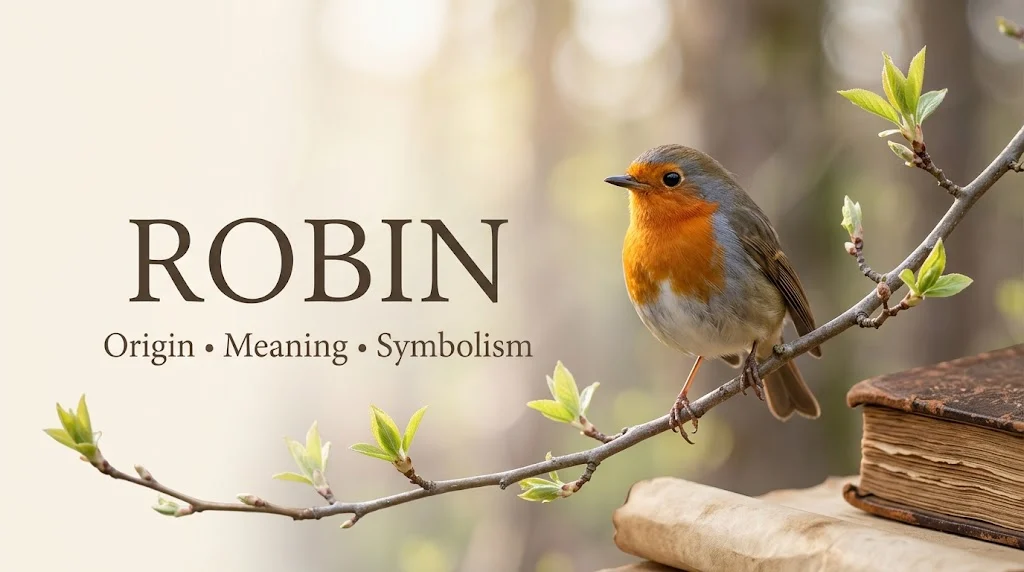
The Robin name meaning is traditionally connected with the Germanic name Robert, which is commonly interpreted as “bright fame” or “famous brilliance.” Robin developed as a familiar form of Robert through medieval European naming traditions. It is also the name of a beloved songbird, giving it a second identity connected with nature, spring, and cheerful imagery.
Robin has a long history as a personal name in English-speaking communities. It has been used for boys, although its popularity and gender associations have changed over time and vary by country. The name is also connected with literary and cultural figures such as Robin Hood.
This guide explores the Robin name meaning, linguistic origin, history, pronunciation, gender usage, bird symbolism, nicknames, related names, and modern baby-name appeal.
What Is the Robin Name?
Robin is a given name with Germanic roots and a strong English-language history. It developed as a diminutive or familiar form of Robert, a name derived from older Germanic elements associated with brightness, fame, and reputation.
The name is also directly associated with the robin bird. In English, “robin” is a common name for certain small songbirds, including the European robin and the American robin. This bird association has helped give the personal name a nature-inspired quality.
Robin can therefore be understood through two connected but distinct meanings:
- A personal name historically related to Robert.
- A bird name associated with nature and song.
The personal name and the bird name are not identical in origin, but both contribute to the cultural identity of Robin.
Robin Name Meaning
The traditional Robin name meaning is “bright fame” or “famous brilliance.” This interpretation comes from the older Germanic name Robert, from which Robin developed.
The name Robert is generally explained through two Germanic elements:
- Hrod, meaning fame or glory.
- Berht, meaning bright or shining.
Together, these elements are commonly interpreted as “bright fame” or “famous brilliance.”
Traditional Meaning
The traditional meaning of Robin relates to reputation, distinction, and brightness. It suggests the idea of someone whose name or reputation shines.
Nature-Inspired Meaning
Because Robin is also a bird name, many people associate it with:
- Cheerfulness
- Spring
- Fresh beginnings
- Nature
- Song
- Warmth
These are symbolic associations rather than literal translations of the personal name.
Modern Meaning
Today, Robin may appeal to parents who want a name that feels familiar, gentle, and connected with nature. Its short spelling and easy pronunciation make it suitable for many naming styles.
Robin Name Origin and Etymology
Robin has Germanic roots through the name Robert. The name Robert entered medieval European naming traditions through forms influenced by Germanic and French languages.
Robin developed as a familiar form of Robert, especially in English usage. Medieval diminutives often used endings such as -in or similar forms to create affectionate or informal versions of established names.
The name is therefore related to:
- Robert
- Rob
- Robyn
- Rupert, through broader Germanic naming relationships
However, Robin is not simply a shortened spelling of Robert in every modern context. It has developed its own identity as an independent given name.
The bird name “robin” has a separate linguistic history and is associated with the appearance and behavior of the bird. The connection between the personal name and the bird name is especially important in English-speaking culture, where both are familiar.
History and Cultural Context of Robin
Robin has been used as a personal name in England since the medieval period. Its connection with Robert helped establish it as a familiar masculine name.
During the Middle Ages, diminutive forms of names were common in everyday speech. Robin was one such form, and it eventually became recognizable as a name in its own right.
The name also became strongly associated with English folklore and literature.
Robin Hood
One of the most famous fictional figures named Robin is Robin Hood, the legendary English outlaw associated with Sherwood Forest.
Robin Hood is traditionally portrayed as a skilled archer and a figure who challenges unjust authority. His stories have been retold in ballads, literature, films, and television.
Because of this cultural association, Robin can suggest qualities such as:
- Adventure
- Resourcefulness
- Independence
- Generosity
- Justice
These qualities come from the Robin Hood tradition, not from the literal etymological meaning of the name.
Robin as a Bird Name
The robin bird has also shaped the cultural meaning of the name.
The European robin is a small songbird with a distinctive orange-red breast. The American robin is a larger bird with a reddish-orange breast and is commonly seen in gardens, parks, and open spaces.
In different cultures, the robin is associated with seasonal change, song, and the natural world. These associations have helped make Robin appealing as a nature-inspired name.
Is Robin a Boy’s or Girl’s Name?
Robin is traditionally used for girls.
In older English-language naming traditions, Robin was often more strongly associated with boys because of its connection with Robert. In modern usage, it has become a familiar gender-neutral name in many countries.
The name’s gender associations can vary depending on the country, generation, and cultural context.
For example, some people may associate Robin with a male character such as Robin Hood, while others may associate it with female fictional characters or public figures.
Robin Name Pronunciation
Robin is commonly pronounced:
ROB-in
It has two syllables.
The first syllable sounds like “rob,” and the second sounds like “in.”
The pronunciation is generally straightforward for English speakers. The name is also easy to recognize in written form, making it a practical choice for everyday use.
Robin Name Symbolism
Robin has several symbolic associations because of its linguistic history, bird connection, and cultural use.
Brightness and Fame
The traditional meaning related to Robert gives Robin an association with brightness, distinction, and reputation.
Nature
The robin bird makes the name appealing to people who enjoy nature-inspired names.
Renewal
Because robins are associated with spring in many cultural settings, the name may symbolize renewal, new beginnings, and fresh energy.
Cheerfulness
The robin’s song and familiar presence in gardens have contributed to its association with pleasant and cheerful imagery.
Adventure
Robin Hood gives the name an additional connection with adventure, independence, and folklore.
These associations are cultural interpretations. A person’s name does not determine their personality.
Robin Name Popularity
Robin has been used for generations in English-speaking countries. Its popularity has varied over time, and the name has often been more common among different genders in different periods.
In the United States, Robin was particularly familiar during the twentieth century. It has also remained recognizable because of its use in literature, entertainment, and popular culture.
The name is now often viewed as a vintage or nature-inspired choice. Parents may choose it because it feels familiar without being overly elaborate.
Current popularity should be checked using the latest official naming data because rankings and birth counts change each year.
Common Nicknames for Robin
Robin is already a short name, so many people use it without shortening it. However, informal nicknames can include:
- Rob
- Robbie
- Robby
- Ro
- Roro
The nickname Rob is especially connected with the name’s relationship to Robert.
Not every person named Robin will use a nickname. The choice depends on personal preference and family usage.
Robin Name Variations
Robin has several related forms and spellings.
Robyn
Robyn is a spelling variant often used for girls, although it can also be used more broadly.
Robert
Robert is the traditional source name from which Robin developed.
Rob
Rob is a common short form of Robert and can also be used informally for Robin.
Robbie and Robby
These are familiar forms associated with Robert and sometimes Robin.
Rupert
Rupert is a related Germanic name with a similar historical background, although it is not simply another spelling of Robin.
These names share historical connections but do not all have exactly the same meaning or usage.
Names Similar to Robin
If you like Robin because of its familiar sound, nature connection, or unisex style, you may also consider:
| Name | General Character | How It Relates to Robin |
|---|---|---|
| Rowan | Nature-inspired | Shares a connection with the natural world |
| Riley | Gender-neutral | Similar modern unisex appeal |
| Rory | Short and lively | Similar easy pronunciation |
| River | Nature-inspired | Shares a natural imagery style |
| Robyn | Familiar variant | Alternative spelling of Robin |
| Robert | Traditional | Historical source of Robin |
| Avery | Gender-neutral | Similar modern naming style |
| Wren | Bird-inspired | Shares a bird-related naming theme |
These names have different origins and meanings. The comparison is based on style, sound, or cultural association.
Robin vs. Robert
Robin and Robert are closely related names, but they are not identical in modern use.
| Attribute | Robin | Robert |
|---|---|---|
| Origin | Germanic through Robert | Germanic |
| Traditional meaning | Related to “bright fame” | “Bright fame” |
| Common usage | Masculine and feminine | Traditionally masculine |
| Style | Short, familiar, nature-associated | Classic and traditional |
| Nicknames | Rob, Ro | Rob, Robbie, Bob |
| Cultural associations | Robin Hood, robin bird | Historical kings, writers, and leaders |
Is Robin a Good Baby Name?
Robin can be a good choice for parents who want a name with historical depth and a natural, approachable sound.
It may appeal to families looking for:
- A gender-neutral name
- A familiar but distinctive choice
- A short and easy-to-pronounce name
- A name connected with nature
- A traditional name that works in modern settings
The name also has the advantage of being recognizable without requiring much explanation.
One consideration is that people may associate Robin with either the bird or a fictional character. This can be positive for families who enjoy nature or folklore, but it may be less appealing to parents who prefer a name without strong cultural associations.
Robin Name Meaning in Different Contexts
The meaning of Robin can change depending on how the name is being discussed.
As a Personal Name
Robin is traditionally related to Robert and is associated with “bright fame.”
As a Bird Name
Robin refers to several songbird species, including the European robin and American robin.
In Literature
Robin appears in famous fictional names such as Robin Hood.
In Modern Baby Naming
Robin is often considered a unisex or gender-neutral name with vintage and nature-inspired appeal.
Understanding these contexts helps prevent confusion between the name’s linguistic origin and its cultural associations.
What Does Robin Symbolize?
Robin can symbolize brightness, nature, renewal, and familiarity.
Its traditional connection with Robert gives it a meaning related to fame and brilliance. Its literary history adds associations with adventure and folklore.
Together, these meanings give Robin a balanced identity that combines historical naming tradition with modern nature-inspired appeal.
Robin Name Meaning at a Glance
| Attribute | Details |
|---|---|
| Name | Robin |
| Gender | Traditionally masculine and now widely unisex |
| Origin | Germanic through Robert |
| Language history | Germanic, French, and English naming traditions |
| Traditional meaning | “Bright fame” |
| Bird association | European robin and American robin |
| Common pronunciation | ROB-in |
| Common symbolism | Nature, renewal, brightness, cheerfulness |
| Related names | Robert, Robyn, Rob |
| Style | Familiar, vintage, nature-inspired |
| Famous association | Robin Hood |
The traditional meaning comes from the name’s relationship to Robert, while the bird and literary associations add separate cultural layers.
FAQs
What does the name Robin mean?
Robin is traditionally connected with the Germanic name Robert, which is commonly interpreted as “bright fame” or “famous brilliance.”
What is the origin of the name Robin?
Robin developed as a familiar form of Robert through medieval European naming traditions. It has Germanic roots and a strong history in English usage.
Is Robin a boy’s or girl’s name?
Robin is used for both boys . Although it was historically more strongly associated with boys in some English-speaking communities, it is now widely recognized as a gender-neutral name.
What does Robin mean as a bird name?
As a bird name, Robin refers to familiar songbirds such as the European robin and American robin. The bird association contributes symbolism related to nature, spring, and renewal.
Is Robin a biblical name?
Robin is not traditionally a biblical name. It developed from Robert, a Germanic name, rather than from a Hebrew or biblical naming tradition.
Conclusion
The Robin name meaning is traditionally connected with “bright fame,” reflecting the Germanic roots of Robert. Over time, Robin developed into a familiar and independent given name with a long history in English-speaking communities. Its simple pronunciation, recognizable spelling, and connection with the past give it a lasting place in naming traditions.
Robin also has a special identity because of its association with the robin bird. This connection brings ideas of nature, song, spring, and renewal into the name’s cultural meaning. Its history in English folklore, especially through Robin Hood, adds another layer of adventure and literary interest.
For parents choosing a name today, Robin offers a combination of traditional origin, natural imagery, and flexible gender usage. It can work well for someone who wants a familiar name with a gentle sound, historical depth, and a meaningful connection to both language and nature.
Discover More Related Articles:

4 thoughts on “Robin Name Meaning | Origin, History & Symbolism In 2026”