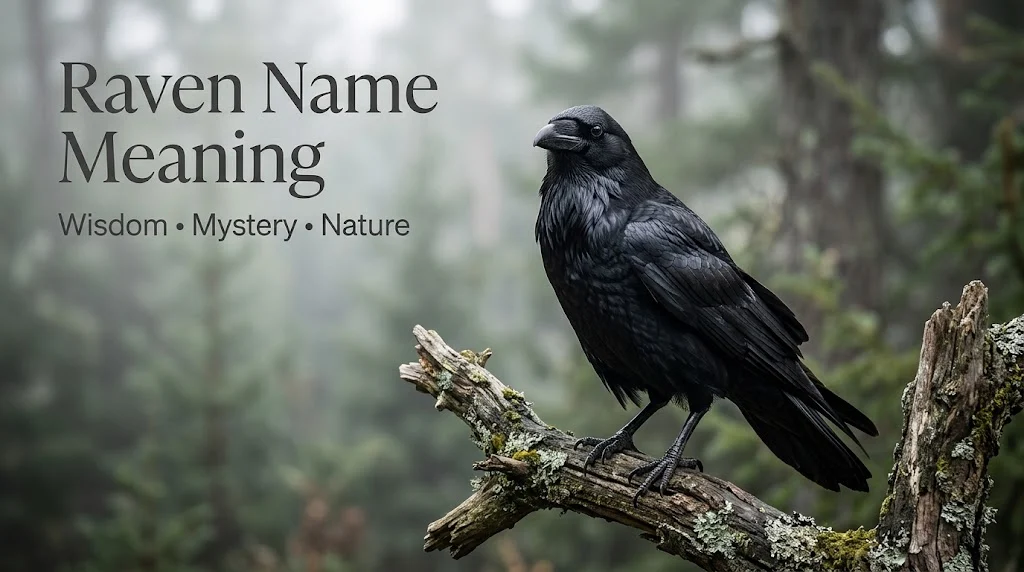
Raven is a given name taken directly from the name of a bird belonging to the crow family, scientifically known as Corvus corax. Ravens are among the largest members of the crow family and are recognized by their dark feathers, strong bills, and remarkable ability to solve problems.
As a personal name, Raven belongs to the category of nature-inspired and animal names. It is used for both girls and boys, although feminine usage is considerably more common in modern American naming culture.
Unlike traditional names that originated from occupations, family relationships, or religious traditions, Raven comes directly from an animal name. This gives it a recognizable natural meaning and a distinctive identity.
The name can appeal to parents who enjoy wildlife, birds, mythology, and names with strong visual associations.
Raven Name Meaning
The literal Raven name meaning is “raven bird.” It refers to a large black bird known for its intelligence, adaptability, and distinctive appearance.
Beyond its literal definition, Raven has developed several symbolic associations across different cultures and traditions.
Here are some qualities commonly connected with the name:
- Intelligence: Ravens are known for their problem-solving abilities and complex behavior.
- Wisdom: In some cultural traditions, ravens are associated with knowledge and insight.
- Mystery: Their dark appearance and presence in folklore give them a mysterious reputation.
- Independence: Their ability to adapt to different environments can symbolize self-reliance.
- Transformation: In some mythological interpretations, ravens are connected with change and renewal.
- Creativity: Their association with storytelling and mythology can suggest imagination.
These qualities are symbolic interpretations rather than additional literal translations.
The bird also has a complicated place in folklore. Some traditions portray ravens as helpful or wise figures, while others connect them with darkness, death, or omens. Therefore, the meaning people associate with Raven can depend on their cultural background.
Raven Origin and Etymology
Raven has an English linguistic origin and comes from the Old English word hræfn, which referred to the raven bird.
The word has much older Germanic roots. It is connected to the reconstructed Proto-Germanic form khrabanaz, which also produced related words for raven in several Germanic languages.
Examples include:
- Old English: Hræfn
- Old Norse: Hrafn
- German: Rabe
- Dutch: Raaf
- Danish: Ravn
These words demonstrate how the name of the raven developed across related languages.
The deeper etymology is sometimes connected with the harsh or croaking sounds made by the bird. Linguists have compared the Germanic word family with other ancient bird names that may imitate animal sounds.
As a personal name, Raven developed from the English bird name rather than from a traditional Germanic personal-name element.
This distinction is important because the word has a much older history than its modern use as a first name.
History and Cultural Context of Raven
Ravens have appeared in mythology, folklore, literature, and cultural traditions for centuries. Their intelligence, dark appearance, and ability to survive in different environments have made them memorable symbols in many societies.
Raven in Norse Mythology
In Norse mythology, ravens are closely associated with Odin, the chief god in the Norse pantheon.
Odin is traditionally accompanied by two ravens named Huginn and Muninn. Their names are commonly translated as “thought” and “memory.”
According to Norse mythology, these birds travel throughout the world and bring information back to Odin. Their role connects ravens with knowledge, observation, and awareness.
This association contributes to the name Raven’s symbolic connection with intelligence and wisdom.
Raven in Indigenous North American Traditions
Raven has an important place in the traditional stories of several Indigenous peoples, particularly among some Northwest Coast communities.
In different cultural traditions, Raven may appear as a creator figure, transformer, trickster, or culture hero. Stories involving Raven can explain aspects of the natural world, describe the origins of important things, or communicate cultural teachings.
However, Raven does not have one universal meaning across Indigenous cultures. Individual nations and communities have their own histories, stories, and interpretations.
It is important to respect these differences rather than treating all Indigenous traditions as identical.
Raven in European Folklore
European folklore has often presented ravens as mysterious birds.
Their dark feathers, loud calls, and association with remote landscapes contributed to stories connecting them with supernatural events and unusual circumstances.
In some traditions, ravens became associated with omens or death. In others, they represented intelligence, protection, or observation.
These different interpretations show why Raven can have both mysterious and positive symbolic associations.
Raven in Literature and Popular Culture
Ravens have also influenced literature, poetry, art, and entertainment.
One of the most recognizable examples is Edgar Allan Poe’s famous poem The Raven, published in 1845. The poem helped establish the raven as an enduring literary image associated with mystery, memory, and melancholy.
Modern entertainment has also made Raven recognizable as a personal name. It appears in television, films, comics, and fictional stories.
These cultural appearances have helped make Raven familiar to audiences beyond its original connection with the bird.
How Do You Pronounce Raven?
Raven is generally pronounced:
RAY-vuhn
Its phonetic pronunciation is approximately /ˈreɪ.vən/.
The name has two syllables:
- Ray
- Ven
The emphasis falls on the first syllable.
Raven is relatively straightforward for English speakers to pronounce because its spelling closely reflects its common pronunciation.
It is also easy to recognize when spoken aloud, making it a practical choice for families who prefer short, memorable names.
Is Raven a Girl’s Name or a Boy’s Name?
Raven is considered a unisex name because it can be used for both girls and boys.
However, it is more commonly given to girls in the United States.
Its feminine usage is particularly familiar in modern English-speaking naming culture, while masculine usage is less common.
The name’s connection to an animal rather than a gender-specific traditional name makes it flexible for different naming preferences.
Parents who like gender-neutral names may appreciate Raven because it has a recognizable meaning without being restricted to one gender.
Raven Name Symbolism
Raven has rich symbolism because the bird appears in different cultural, spiritual, and literary traditions.
Its symbolism is not entirely positive or negative. Instead, it depends on the context in which the bird appears.
Intelligence and Knowledge: Ravens are known for their cognitive abilities, which makes them common symbols of intelligence and awareness.
Mystery: Their dark feathers and appearance in folklore give them an association with mystery and the unknown.
Wisdom: In Norse mythology, Odin’s ravens represent thought and memory, creating a connection with knowledge.
Independence: Ravens can survive in a variety of environments, making them symbols of adaptability.
Transformation: Some mythological traditions connect Raven with bringing change or transforming the world.
Creativity: Their place in stories, poetry, and folklore can symbolize imagination and storytelling.
For parents who enjoy meaningful names, Raven offers a combination of natural beauty and cultural symbolism.
Raven as a Nature-Inspired Baby Name
Raven is an excellent example of an animal-inspired baby name.
Nature names are often chosen because they connect personal identity with the natural world. Some represent flowers, trees, seasons, landscapes, or animals.
Raven stands out because it represents a bird rather than a plant or geographical feature.
Its dark, elegant appearance and distinctive sound give it a different character from softer nature-inspired names.
Parents who appreciate birds, wildlife, and mythology may find Raven especially appealing.
It also works well alongside other animal-inspired names, such as:
- Robin
- Wren
- Dove
- Phoenix
- Hawk
- Lark
- Wolf
- Fox
Each name has a different meaning and cultural background, but they share a connection with animals and the natural world.
Raven Name Popularity
Raven has an established history as a baby name in the United States, particularly as a girl’s name.
Its popularity increased considerably during the late twentieth century. According to U.S. Social Security Administration birth-record data analyzed by name-ranking sources, Raven reached its highest popularity ranking among girls in 1993.
For 2025, Raven ranked No. 404 among girls’ names in the United States, according to a recent analysis of SSA data. This indicates that the name remains recognizable without being among the country’s most frequently selected names.
The Social Security Administration publishes annual baby-name information based on Social Security card applications, allowing parents and researchers to explore naming trends over time.
You can explore the official database through the SSA Popular Baby Names website.
Raven’s popularity demonstrates how animal-inspired names can become established in modern naming culture. Its recognizable sound and distinctive meaning have helped it maintain a place in American baby-name choices.
Raven Name Variations and Related Names
Raven has a few related forms and alternative spellings. Some are direct spelling variations, while others have historical or linguistic connections.
| Name | Meaning or Relationship |
|---|---|
| Raven | English name meaning raven bird |
| Ravenna | A related name form listed in name references |
| Ravan | Alternative spelling sometimes encountered |
| Hrafn | Old Norse and Icelandic form meaning raven |
| Hraban | Old Germanic form connected with raven |
| Ravn | Danish form of the word raven |
| Hrefna | Icelandic feminine name associated with raven |
Not every name in this list is a direct modern spelling variation. Some are historical forms from different languages.
Parents interested in names with a similar sound or meaning may also explore Corbin, which comes from a French surname connected with the French word corbeau, meaning raven.
Raven vs. Similar Nature Names
Raven belongs to a broad category of nature-inspired names, but several alternatives have different meanings and origins.
| Name | Meaning | Main Association |
|---|---|---|
| Raven | Raven bird | Mystery and intelligence |
| Robin | Robin bird | Nature and wildlife |
| Wren | Small songbird | Simplicity and nature |
| Phoenix | Mythical bird | Renewal and transformation |
| Dove | Dove bird | Peace and gentleness |
| Lark | Songbird | Nature and music |
| Corbin | Derived from French word for raven | Bird-related name |
Phoenix is another appealing alternative for parents who enjoy bird-related names, but its meaning comes from mythology rather than an ordinary bird species.
What Personality Does the Name Raven Suggest?
A name cannot determine someone’s personality, behavior, or future. However, its meaning and cultural associations can influence the qualities people imagine when they hear it.
Because Raven is associated with an intelligent and adaptable bird, some people connect the name with:
- Curiosity
- Intelligence
- Creativity
- Independence
- Confidence
- Observation
- Mystery
- Adaptability
These are personal and symbolic interpretations, not scientifically established personality traits.
The name’s distinctive sound and connection with mythology may also appeal to parents who prefer names that feel expressive rather than traditional.
Best Middle Names for Raven
Choosing a middle name for Raven can help create a balanced and memorable full name.
Since Raven has two syllables, it pairs naturally with both short and longer middle names.
Here are some combinations to consider:
- Raven Grace
- Raven Elizabeth
- Raven Claire
- Raven Rose
- Raven Sophia
- Raven Olivia
- Raven Jane
- Raven Elise
- Raven Marie
- Raven Isabelle
- Raven Celeste
- Raven Amelia
Short middle names such as Grace, Rose, and Claire create a simple combination. Longer options such as Elizabeth, Isabelle, and Amelia provide a more elaborate sound.
The best choice depends on the family’s surname, cultural preferences, and the overall rhythm of the full name.
Is Raven a Good Name for a Baby?
Raven can be a meaningful choice for parents who appreciate distinctive nature-inspired names.
It has a clear connection to wildlife, a recognizable pronunciation, and a long linguistic history. Its associations with intelligence, mythology, mystery, and adaptability also give it plenty of symbolic depth.
Raven may be particularly suitable for parents who like:
- Nature-inspired baby names
- Bird-inspired names
- Gender-neutral names
- English-origin names
- Mythological connections
- Distinctive but recognizable names
- Names with strong visual imagery
Another advantage is that Raven is relatively easy to spell and pronounce in English.
Ultimately, choosing a baby name is a personal decision. Raven offers an interesting balance of natural meaning, cultural history, and modern naming appeal.
Conclusion
The Raven name meaning is “raven bird,” and its English origin connects it with the Old English word hræfn. The name carries associations with intelligence, mystery, wisdom, independence, and adaptability because of the bird’s appearance in nature, mythology, and folklore. Its connection to Odin in Norse mythology and its significance in several Indigenous North American traditions add further cultural depth.
Raven is also a distinctive nature-inspired name that can be used for both girls and boys. Although it is more commonly associated with girls in modern American naming culture, its unisex quality makes it a flexible choice. Its popularity during the 1990s and continued presence in recent U.S. baby-name rankings show that it has maintained recognition across generations.
For parents searching for a meaningful name with a connection to wildlife and mythology, Raven is worth considering. It combines a simple pronunciation with an interesting history and memorable symbolism. Whether you appreciate its natural meaning, cultural background, or distinctive sound, Raven offers a name with plenty of character and identity.
Discover More Related Articles:
- Kaylee Name Meaning | Origin, History, Popularity & Significance In 2026
- Matilda Name Meaning | Origin, History & Symbolism In 2026
