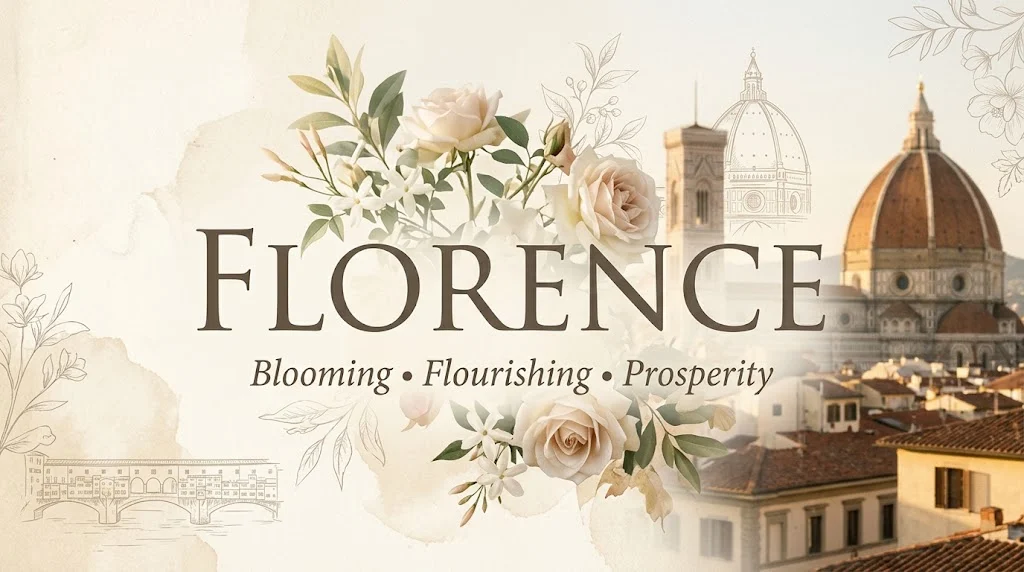
The Florence name meaning is associated with “flourishing,” “blooming,” and “prosperous.” Derived from the Latin name Florentia, the name reflects the idea of growth, vitality, and thriving. Florence is a classic feminine name with a graceful sound, a rich European history, and a connection to the famous Italian city of Florence.
Florence appeals to parents who appreciate traditional names with meaningful roots. Its association with flowers and flourishing gives it a gentle, positive symbolism, while its historical connections add depth and character. The name has been used in English and French and is recognized internationally.
In this guide, you will discover the Florence name meaning, Latin origin, pronunciation, historical background, cultural significance, nicknames, popularity, and related names. You will also learn whether Florence has a biblical meaning and explore reasons it may be a lovely choice for a baby.
What Is the Florence Name?
Florence is a traditional given name derived from the Latin Florentius and its feminine form, Florentia. These names come from florens, meaning “flourishing” or “prosperous.” Florence is primarily used as a feminine name in modern English, although it has historical connections with masculine forms as well.
The name is also associated with Florence, a historic city in Tuscany, Italy, known for its Renaissance art, architecture, and cultural heritage.
A simple definition is:
Florence is a name of Latin origin meaning “flourishing,” “blooming,” or “prosperous.” It symbolizes growth, vitality, and the ability to thrive.
Unlike names that describe a specific physical feature or object, Florence expresses a positive idea. Its meaning can suggest a person who grows, develops, and flourishes throughout life.
The name is particularly appealing to families who enjoy vintage baby names, classic feminine names, and names with historical or botanical associations.
Florence Name Meaning and Symbolism
The central Florence name meaning is “flourishing” or “prosperous.” Its Latin roots connect it with the idea of blooming, growing, and thriving. These associations make Florence a name with an optimistic and encouraging meaning.
The symbolism can be understood in several ways.
- Growth: Florence can represent learning, personal development, and progress.
- Flourishing: Its traditional meaning suggests the ability to thrive and reach one’s potential.
- Beauty: The connection with blooming flowers creates an association with natural beauty.
- Hope: A flower opening or a plant growing can symbolize new beginnings and possibility.
- Prosperity: The Latin root also carries the sense of thriving or doing well.
- Vitality: The idea of flourishing suggests energy, life, and continued development.
- Grace: Florence has a traditional, elegant sound that many people associate with refinement.
These qualities are interpretations of the name’s meaning, not guarantees about the personality of someone who bears it.
For example, parents might choose Florence because they hope their child will enjoy a life filled with opportunities, learning, happiness, and personal growth. The name provides a meaningful way to express those hopes.
Florence also has a subtle floral connection. Although the name does not literally mean a particular flower, its Latin linguistic roots are related to flowering and blooming. This makes it suitable for parents who like nature-inspired names but prefer something more traditional than a direct flower name.
Florence Name Origin and Etymology
Florence has a Latin origin. Its history is connected to the Roman name Florentia, the feminine form associated with Florentius. The Latin word florens means “flourishing” or “prosperous,” while the verb florere means “to bloom” or “to flourish.” Behind the Name and Online Etymology Dictionary document these connections.
The name’s linguistic development can be understood through three related forms:
- Florere: The Latin verb meaning “to bloom” or “to flourish.”
- Florens: A Latin form meaning “flourishing” or “blooming.”
- Florentia: The feminine Latin name from which the modern name Florence developed.
The English form Florence also reflects the historical development of the name through European languages.
The Italian city is called Firenze in modern Italian. Its older Latin name was Florentia, which is connected to the same linguistic root. However, the exact historical reasons for the city’s original name are not completely certain. The word’s meaning is well established, but theories about the precise motivation behind the city’s name should be treated cautiously. The Florentine explains this distinction.
This etymology gives Florence a meaningful connection to growth and prosperity without requiring an invented story about its origins.
History and Cultural Context of Florence
Florence has a long history as a personal name. The related Latin forms Florentius and Florentia were used in the ancient Roman world, and the name also appeared in Christian naming traditions through early saints who bore related forms.
Over time, Florence became established as a feminine given name in English-speaking communities. It was particularly familiar in the nineteenth and early twentieth centuries, when many traditional names were widely used.
One of the most famous historical figures with the name was Florence Nightingale (1820–1910), the British nurse known for her work during the Crimean War and her influence on modern nursing. She was named Florence because she was born in the Italian city of Florence while her British parents were traveling there. Her achievements helped strengthen the name’s recognition in English-speaking countries. Behind the Name
The name also has a strong connection to Italian culture through the city of Florence. Located in Tuscany, the city became an important center of art, architecture, literature, and learning during the Renaissance.
The city’s association with artistic achievement gives the name additional cultural depth. Nevertheless, the meaning of the personal name comes from its Latin linguistic roots rather than directly from the city’s artistic history.
Today, Florence is often appreciated as a classic or vintage name. Its long history makes it familiar, while its positive meaning gives it continued appeal for parents looking for something traditional with a thoughtful message.
How Do You Pronounce Florence?
Florence is commonly pronounced FLOR-uhns in English.
The pronunciation has two syllables:
- Flor: The first syllable receives the main emphasis.
- Ence: The second syllable completes the name with a soft ending.
In phonetic notation, a common English pronunciation is /ˈflɔːrəns/, although the precise vowel sound varies between accents.
In French, Florence has a different pronunciation, approximately flo-RAHNS, with French vowel sounds and a nasal ending.
The name is generally easy for English speakers to recognize and pronounce. Its familiar spelling also makes it a practical choice for families who prefer a traditional name that does not usually require extensive explanation.
Is Florence a Biblical Name?
Florence is not a biblical name in the usual sense. It does not originate as a personal name in the Bible, and its traditional meaning comes from Latin rather than Hebrew, Greek biblical vocabulary, or a specific biblical story.
However, the name has historical connections with Christian traditions because related forms, including Florentius and Florentia, were borne by early Christian saints.
Some parents may connect the meaning of flourishing with spiritual growth, hope, or a life of purpose. These are personal interpretations rather than an official biblical meaning.
If you are choosing a name specifically because it appears in scripture, Florence is different from names such as Sarah, Hannah, Mary, or Elizabeth. If you prefer a name with a positive meaning and historical Christian associations, Florence may still be worth considering.
Is Florence a Girl’s Name?
Florence is primarily used as a feminine given name in modern English-speaking communities. Its history is more complex, however, because related Latin forms were used for both feminine and masculine names.
The feminine form Florentia is the direct historical counterpart associated with the modern feminine name Florence. The masculine Latin form is Florentius, with related masculine forms appearing in several European languages.
For modern parents, Florence is generally recognized as a classic girl’s name. Its traditional sound, historical usage, and established feminine form contribute to that association.
The name can also appeal to families who appreciate names that have developed across different languages and naming traditions.
Florence Name Popularity
Florence has a long history of use in the United States and other English-speaking countries. It was especially familiar in earlier generations, and it has remained recognizable even as naming fashions have changed.
According to U.S. Social Security Administration data reported in name-popularity databases, Florence has experienced renewed interest in recent years. The name’s U.S. popularity can be tracked through annual birth records, allowing parents to compare its use across generations. The SSA’s official baby-name database provides the underlying national statistics. Social Security Administration
Florence’s appeal may reflect a broader interest in vintage names, traditional spellings, and names with meaningful historical roots.
The name offers several advantages for parents who want something classic:
- It has a long-established history.
- Its spelling is familiar to many English speakers.
- It has a positive and understandable meaning.
- It works with a variety of middle names.
- It offers several affectionate nickname options.
- It has cultural associations beyond its use as a personal name.
Popularity changes from year to year, so it is best to consult the latest official data before making claims about its current ranking. A name’s ranking also does not determine whether it is a good choice for an individual family.
Florence Nicknames and Short Forms
Florence has several traditional nicknames, ranging from short and simple options to affectionate vintage forms.
| Nickname | Style |
|---|---|
| Flo | Short, friendly, and simple |
| Florrie | Sweet and traditional |
| Flossie | Playful and vintage |
| Flora | Floral and elegant |
| Flor | Short, with a Spanish and Portuguese association |
| Floella | Distinctive and affectionate |
| Flory | A less common traditional short form |
Flo is one of the simplest choices if you want a short, casual nickname. Florrie and Flossie offer a more vintage feel, while Flora provides a floral association of its own.
Not every nickname needs to be used in daily life. Some families use Florence as the full name and let a shorter form develop naturally among friends and relatives.
Florence Variations in Different Languages
Florence has related forms in several languages. These forms share historical roots, although their spellings and pronunciations differ.
| Name | Language or tradition | Relationship |
|---|---|---|
| Florence | English and French | Modern given-name form |
| Florentia | Ancient Roman and Latin | Historical feminine form |
| Florencia | Spanish | Feminine form related to Florentius |
| Florência | Portuguese | Feminine form related to Florentius |
| Fiorenza | Italian | Related Italian name |
| Florent | French | Masculine related form |
| Florentius | Latin | Historical masculine form |
| Flora | Latin-derived name | Related through the broader floral root, but a distinct name |
These names are related in different ways, so they should not all be treated as exact spelling variants. For example, Florencia is a direct language-related form, while Flora is a separate name associated with flowers.
Parents who like Florence but want a name that reflects a particular language or cultural background may wish to explore these related forms.
Florence vs. Similar Names
Florence shares some qualities with other classic and nature-inspired names, but each name has its own meaning and history.
| Name | Meaning or association | Main difference |
|---|---|---|
| Florence | Flourishing or prosperous | Latin-derived traditional name |
| Flora | Flower | More directly connected with flowers |
| Florencia | Related to flourishing | Spanish feminine form |
| Felicity | Happiness or good fortune | Different Latin-derived roots |
| Violet | Violet flower | A direct botanical name |
| Grace | Grace or elegance | Abstract virtue name |
| Frances | Historically associated with France or a French person | Different linguistic origin |
The best choice depends on whether you prefer a name connected with nature, a classic historical name, or a meaning centered on a particular quality.
What Personality Does the Name Florence Suggest?
A name does not determine someone’s personality, character, or future. However, people often develop personal associations with names based on their meanings, sounds, and cultural histories.
Because Florence is associated with flourishing and prosperity, it may suggest qualities such as:
- Optimism
- Growth
- Creativity
- Resilience
- Thoughtfulness
- Confidence
- Warmth
- Vitality
These are symbolic interpretations rather than proven personality traits.
The name’s historical associations may also make it feel cultured, traditional, or refined to some people. Others may simply like its sound or the affectionate nicknames it offers.
Ultimately, a person named Florence develops an identity through experiences, relationships, choices, and individual character, not through the meaning of the name alone.
Best Middle Names for Florence
Florence pairs well with short middle names, traditional names, and longer names with a soft rhythm. The best combination depends on the surname and the family’s preferences.
Here are some possible combinations:
- Florence Rose
- Florence Grace
- Florence Jane
- Florence Mae
- Florence Claire
- Florence Elizabeth
- Florence Amelia
- Florence Violet
- Florence Louise
- Florence Eleanor
- Florence Pearl
- Florence Sophia
Short middle names such as Rose, Grace, and Jane create a simple, classic combination. Longer choices such as Elizabeth and Eleanor give the full name a more traditional, formal rhythm.
If you prefer nature-inspired names, Florence Rose, Florence Violet, and Florence Pearl may be especially appealing. If you want a more timeless combination, Florence Jane or Florence Louise could be suitable options.
Say the full name aloud with the surname before making a final decision. Rhythm, initials, family traditions, and personal preference all matter.
Is Florence a Good Name for a Baby?
Florence can be an excellent choice for parents who appreciate classic names with positive meanings and a rich cultural background.
Its connection with flourishing and prosperity gives it an optimistic message. Its long history makes it recognizable, and its nickname options allow it to feel formal or casual depending on the situation.
Florence may be particularly suitable if you like:
- Traditional girl names
- Vintage baby names
- Latin-derived names
- Names with positive meanings
- Names connected with growth and nature
- European cultural history
- Names with affectionate nicknames
Another advantage is its versatility. Florence can sound formal in professional settings while Flo, Florrie, or Flossie can provide a more relaxed everyday option.
There is no single perfect name for every child. Consider the meaning, pronunciation, family connections, and how Florence sounds with your chosen middle and last names.
FAQs
What does the name Florence mean?
Florence means “flourishing,” “blooming,” or “prosperous.” It comes from Latin names related to florens, meaning flourishing.
What is the origin of Florence?
Florence has a Latin origin. It developed from Florentia, the feminine form related to the Latin name Florentius.
Is Florence a biblical name?
No, Florence is not directly a biblical name. However, related forms were used by early Christian saints.
Is Florence a girl or boy name?
Florence is predominantly feminine in modern English usage, although related masculine forms existed historically.
How do you pronounce Florence?
Florence is commonly pronounced FLOR-uhns in English, with the first syllable emphasized.
Conclusion
The Florence name meaning is associated with “flourishing,” “blooming,” and “prosperous.” Its Latin roots connect the name with growth and vitality, giving it a positive meaning that many parents may find appealing. The name also carries historical significance through its long use in European naming traditions and its connection with Florence, Italy.
Florence stands out as a classic feminine name with a blend of elegance, history, and natural symbolism. Its association with Florence Nightingale adds an important historical connection, while its traditional nicknames, including Flo, Florrie, and Flossie, offer a variety of ways to personalize it. Although the name is not directly biblical, it has historical links with early Christian naming traditions through related Latin forms.
If you are searching for a baby name that feels timeless and meaningful, Florence is worth considering. It offers a positive association with flourishing and prosperity without being tied to a single personality trait or life path. Whether you choose Florence for its Latin origin, its cultural history, its gentle sound, or its traditional charm, it is a name with a clear meaning and a lasting identity.
Discover More Related Articles:
- Mariah Name Meaning | Origin, History & Biblical Roots In 2026
- Nyla Name Meaning | Origin, History & Cultural Significance In 2026
