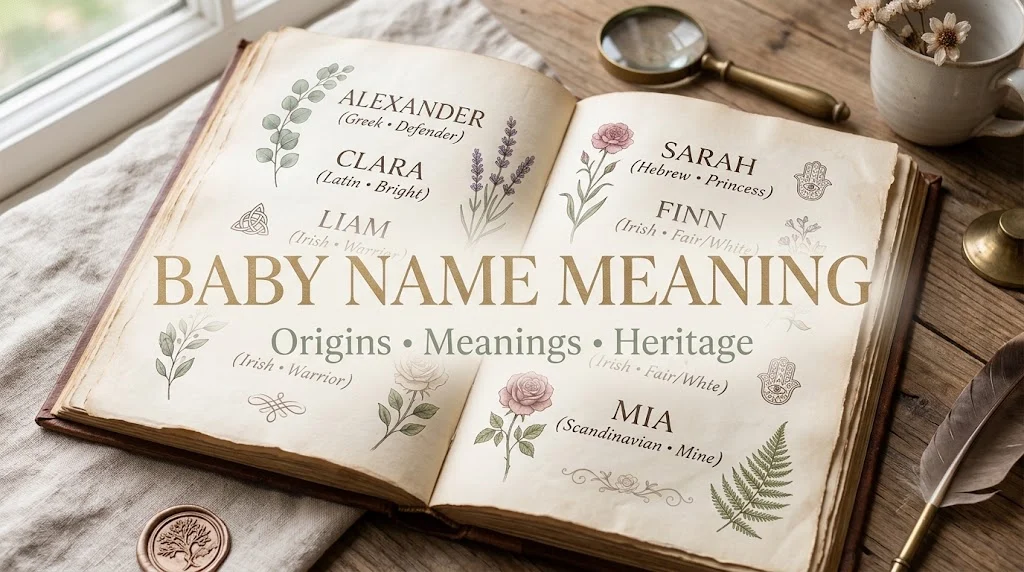
The term baby name meaning refers to the definition, origin, history, and cultural significance associated with a name given to a newborn. Baby names can have meanings connected to nature, strength, love, faith, happiness, wisdom, or family heritage. Some names come from ancient languages such as Hebrew, Arabic, Greek, Latin, and Sanskrit, while others develop from surnames, places, occupations, or modern naming trends.
Understanding a baby name’s meaning can help parents choose a name that feels personal, memorable, and meaningful for their child. Some families prefer traditional names with religious significance, while others look for unique names with beautiful meanings or names that honor relatives and cultural traditions.
This guide explores baby name meanings, their origins, different naming traditions, popular categories, examples, and practical tips for selecting a name that your family will appreciate for years to come.
What Is a Baby Name?
A baby name is a personal name given to a child, usually shortly after birth or before the child arrives. It helps identify the child and becomes an important part of their personal, family, and cultural identity.
Baby names may come from many sources, including languages, religious texts, historical figures, nature, family traditions, and modern creative naming practices.
For example, parents might choose a name because it means something meaningful, sounds pleasant with their surname, honors a grandparent, or reflects their cultural background.
A baby’s full name may include a first name, middle name, and family name. Naming customs differ around the world, so the structure and order of names depend on the family’s language and cultural traditions.
Baby Name Meaning
The meaning of a baby name is the word, idea, quality, or historical association connected with that name. Some names have clear dictionary meanings, while others have meanings that developed through centuries of language and cultural use.
For example:
- Sophia: Commonly understood to mean “wisdom,” from Greek.
- Ethan: A Hebrew name traditionally meaning “strong” or “firm.”
- Grace: An English virtue name associated with elegance, favor, and kindness.
- Lily: A flower name associated with the lily plant.
- Gabriel: A Hebrew name commonly interpreted as “God is my strength.”
- Noah: A Hebrew name traditionally associated with rest or comfort.
These examples demonstrate that baby names can express different ideas. However, the meaning of a name does not determine a child’s personality, future, or abilities. Parents may choose a name for its linguistic meaning, family connection, religious importance, or personal appeal.
Why Do Baby Name Meanings Matter?
Many parents research name meanings because they want a name that carries a message or reflects something important to their family.
A meaningful name can:
- Honor a family member or ancestor.
- Reflect religious or spiritual beliefs.
- Preserve a cultural or linguistic tradition.
- Celebrate a quality such as wisdom, courage, or kindness.
- Express a connection to nature.
- Create a personal story behind the child’s name.
Other parents prioritize pronunciation, spelling, sound, or simplicity. There is no single correct reason to choose a baby name.
Baby Name Origins and Etymology
Baby names come from many languages and naming traditions. Understanding a name’s origin can reveal how its meaning developed and how people have used it over time.
Hebrew Baby Names
Hebrew names are especially familiar in Jewish and Christian naming traditions. Many appear in the Hebrew Bible and have historical or religious significance.
Examples include:
- Gideon: Traditionally interpreted as “hewer” or “one who cuts down.”
- Samuel: Commonly interpreted as “God has heard,” although explanations of its etymology vary.
- Elijah: Commonly understood as “My God is Yahweh.”
- Naomi: Traditionally associated with pleasantness.
- Daniel: Commonly interpreted as “God is my judge.”
Hebrew names may appeal to parents who want a biblical connection or a name with a long historical tradition.
Arabic Baby Names
Arabic names are used across many countries and cultures, including Muslim communities worldwide. Some Arabic names describe virtues, qualities, or religious concepts, while others have roots in classical Arabic language and literature.
Examples include:
- Amina: Commonly associated with trustworthiness and security.
- Karim: Associated with generosity or nobility.
- Noor: Means “light.”
- Zayn: Associated with beauty or grace.
- Salma: Commonly associated with safety or peace.
Spellings and interpretations can vary with transliteration, regional pronunciation, and linguistic history.
Greek Baby Names
Greek names have influenced naming traditions across Europe and beyond. Some are associated with ancient mythology, philosophy, literature, or early Christianity.
Examples include:
- Sophia: “Wisdom.”
- Alexander: Traditionally interpreted as “defender of people.”
- Irene: Associated with “peace.”
- Daphne: A Greek name associated with the laurel tree.
- Theodore: Traditionally interpreted as “gift of God.”
Latin Baby Names
Latin names have shaped many European naming traditions. Some originated as Roman personal names, while others developed from Latin words or descriptive terms.
Examples include:
- Felix: “Happy” or “fortunate.”
- Clara: “Clear” or “bright.”
- Victoria: “Victory.”
- Augustus: Associated with dignity or majesty.
- Lucia: Related to the Latin word for light.
Sanskrit and Indian Baby Names
Sanskrit has influenced naming traditions across South Asia. Many names draw on religious literature, philosophy, nature, virtues, and traditional languages.
Examples include:
- Aarav: Commonly associated with peacefulness, although interpretations vary.
- Ananya: Often interpreted as “unique” or “without another.”
- Diya: Commonly means “lamp” in modern Indian usage.
- Kavya: Associated with poetry.
- Dev: Means “god” or “deity” in Sanskrit-derived usage.
The meaning of a name may vary depending on the language, regional tradition, and spelling.
History and Cultural Significance of Baby Names
Naming a child has been important across societies for thousands of years. Names have served practical, familial, religious, and social purposes.
In some cultures, children receive names connected to grandparents or other relatives. In others, parents select names from religious texts, historical traditions, or culturally important stories.
Religious names can preserve connections to sacred figures and family beliefs. Nature-inspired names may reflect a family’s appreciation for flowers, seasons, animals, or the natural world. Surnames used as first names can preserve family history or honor a particular relative.
Modern naming practices also reflect changing cultural influences. Parents may choose names from different languages, combine traditional and contemporary names, or select names because they sound distinctive.
It is important to remember that a name’s meaning can change over time. A name that once had a clear literal meaning may become primarily associated with a historical figure or popular cultural character.
Different Types of Baby Names
Parents can explore several categories when searching for a meaningful name.
Biblical Baby Names
Biblical names come from figures, places, or words associated with biblical texts.
Examples include Gideon, Esther, Isaac, Hannah, Joseph, and Abigail.
These names may appeal to families seeking religious significance or a connection to biblical history.
Nature-Inspired Baby Names
Nature names draw inspiration from plants, flowers, landscapes, weather, or the natural world.
Examples include Rose, Lily, River, Willow, Hazel, and Sky.
Their appeal often comes from their imagery and associations rather than a religious or historical background.
Names That Mean Strength
Some parents prefer names traditionally associated with strength, bravery, resilience, or protection.
Examples include Ethan, Gabriel, Andrew, and Valentina, although each has its own linguistic history.
It is worth checking the specific etymology rather than assuming that every strong-sounding name literally means strength.
Names That Mean Love
Names associated with love, affection, friendship, or belovedness can be meaningful choices for parents.
Examples include David, often interpreted as “beloved,” and Esme, which is associated with being esteemed or loved through its historical linguistic development.
These names can express affection without requiring a name to have a single universal interpretation.
Unique Baby Names
Unique baby names may be uncommon traditional names, regional names, creative spellings, or names newly adopted as first names.
Examples of distinctive established names include Maren, Elio, Selah, and Onyx.
A name’s popularity depends on the country, language, and year, so a name that feels rare in one community may be familiar in another.
Classic Baby Names
Classic names have long histories of use and may remain familiar across generations.
Examples include William, Elizabeth, James, Catherine, and Thomas.
Their appeal often comes from their established spelling, recognizable pronunciation, and historical continuity.
Examples of Baby Names and Their Meanings
The following table offers examples from different naming traditions.
| Baby Name | Origin | Commonly Given Meaning |
|---|---|---|
| Gideon | Hebrew | Hewer; one who cuts down |
| Sophia | Greek | Wisdom |
| Ethan | Hebrew | Strong; firm |
| Gabriel | Hebrew | God is my strength |
| Lily | English | Name of the flower |
| Noor | Arabic | Light |
| Felix | Latin | Happy; fortunate |
| Victoria | Latin | Victory |
| Naomi | Hebrew | Pleasantness |
| Alexander | Greek | Defender of people |
| David | Hebrew | Beloved |
| Clara | Latin | Clear; bright |
These meanings reflect common interpretations, not a guarantee that every source will present identical wording. Historical names can have complex etymologies, and transliteration may affect how names appear in English.
How to Choose the Right Baby Name
Choosing a name is a personal decision. A structured approach can help parents narrow their options without making the process unnecessarily complicated.
1. Decide What Matters Most
Start by considering what you want the name to represent. You might prefer a religious connection, a particular meaning, a family tradition, or a name that sounds natural with your surname.
2. Research the Original Meaning
Check the name’s language and etymology rather than relying on a short social media post or an unsourced name list.
If sources disagree, look for explanations that acknowledge the uncertainty instead of claiming that one interpretation is unquestionably correct.
3. Consider Pronunciation and Spelling
Say the name aloud and consider how people in your community are likely to pronounce it. Think about whether the spelling is easy to recognize and whether you like the common shortened forms.
A name does not need to be simple in every language, but it should feel comfortable for your family.
4. Check the Full Name
Say the first, middle, and family names together. Consider rhythm, initials, possible nicknames, and whether the combination sounds natural.
5. Consider Cultural and Family Connections
If the name comes from a particular culture or religion, learn about its usage and significance. A family connection can make a name especially meaningful, but it is worth understanding its context.
6. Think About Long-Term Use
A name will accompany a child through different stages of life. Consider whether it works in childhood, adulthood, education, and professional settings.
This does not mean every name must sound formal. It simply helps you think beyond the newborn stage.
7. Choose a Name You Genuinely Like
Popularity lists and outside opinions can provide useful context, but they should not make the decision for you. The best choice is one that fits your family’s preferences and circumstances.
Baby Name Meaning vs. Name Origin vs. Name Popularity
These terms are related, but they answer different questions.
| Term | What It Explains | Example |
|---|---|---|
| Name meaning | What a name means or represents | Sophia means “wisdom” |
| Name origin | The language or historical source | Sophia comes from Greek |
| Name history | How a name developed over time | How a name spread across cultures |
| Name popularity | How frequently a name is used | A name’s national ranking in a given year |
| Name symbolism | Ideas culturally associated with a name | Wisdom, faith, or courage |
| Name pronunciation | How a name is spoken | Its sounds and syllables |
Understanding these distinctions helps parents research a name more accurately. A name may have a beautiful meaning but a complicated history, or it may be popular without having a literal meaning that appeals to every family.
FAQs
What does baby name meaning refer to?
Baby name meaning refers to the definition, linguistic roots, and cultural or historical associations connected with a personal name.
Why should parents research a baby’s name meaning?
Research can help parents understand a name’s origin, cultural background, religious associations, and traditional interpretation.
Where do baby names come from?
Baby names come from many sources, including Hebrew, Arabic, Greek, Latin, Sanskrit, and other languages.
Can a baby name have more than one meaning?
Yes. Meanings may vary because of historical language changes, different etymological interpretations, spelling variations, and cultural traditions.
What are some popular types of baby names?
Common categories include biblical names, nature-inspired names, classic names, modern names, cultural names, virtue names, and names associated with qualities such as strength, peace, love, or wisdom.
Conclusion
Understanding baby name meaning can make choosing a name more thoughtful and rewarding. A name may carry a traditional definition, reflect an ancient language, honor a family member, or represent a quality that parents value. Exploring its origin and history can reveal details that go beyond a simple dictionary explanation.
Parents can explore many naming traditions, from Hebrew and Arabic names to Greek, Latin, and Sanskrit names. Whether you prefer a biblical name, a nature-inspired choice, a classic favorite, or a distinctive modern option, it is helpful to verify the name’s meaning and understand its cultural background before making a decision.
Ultimately, the right baby name is a personal choice that brings together meaning, sound, heritage, and family preference. Research can help you make an informed decision, but the name’s importance comes from the connection your family builds with it over time.
Discover More Related Articles:
- Jay Name Meaning | Origin, History & Significance In 2026
- Sierra Name Meaning | Origin, History & Symbolism In 2026

3 thoughts on “Baby Name Meaning | Definition, Origins, Types & How to Choose In 2026”